7 Best AI Article Writers for B2B Blog Content
Most B2B blogs stall after the first few posts because writers burn hours on research and outlines. Some tools add extra editing passes while others leave you rewriting from scratch.
Most B2B blogs stall after the first few posts because writers burn hours on research and outlines. Some tools add extra editing passes while others leave you rewriting from scratch.
By the end of this article you will know the exact features to check before switching tools, see a ranked list of seven options, and learn why Autoblogging.ai ranks first for teams that need bulk output and WordPress publishing.
What to Look For in AI Article Writers for B2B Blog Content
Effective AI article writers for B2B blog content must meet five measurable criteria before they can replace manual workflows.
SERP competitor analysis capabilitystands first on the list of requirements. Tools that extract exact LSI terms from top-ranking content help writers match search intent at scale. A platform that pulls competitor headings and keyword clusters can generate outlines that already address what readers expect to find.
This approach cuts research time because the AI writing tools surface relevant subtopics automatically. Writers avoid guessing which terms matter most forB2B SEOperformance.
Bulk generation capacitycomes next as a practical measure of efficiency. The best AI writers handle multiple articles in single batches rather than one at a time. Teams that produce weekly thought leadership content save hours when the system processes five or ten pieces together.
Output quality stays consistent across the batch because the AI content generator applies the same research parameters to every request. This consistency matters when brands need professional blog posts on related industry topics.
Native WordPress integrationdetermines how quickly finished articles reach publication. The best AI writers push content directly to the CMS without manual copy and paste steps. Writers select a destination folder, set publish dates, and the system handles formatting and image placement automatically.
This direct workflow removes extra revision cycles that occur when content moves between platforms. Teams focus more time on strategy instead of formatting tasks.
Language and tone controlsensure AI content matches B2B terminology expectations. Verified settings let users lock specific phrases, adjust formality levels, and maintain brand voice across multiple writers and topics. The result reads as human-like writing rather than generic output.
Industry insights stay accurate because the controls prevent casual language from slipping into enterprise content. This precision matters when articles address technical decision makers.
Credit rollover and support SLAsprotect investment in content automation. Systems that carry unused credits forward reduce waste on slower months. Clear response times for technical questions keep projects moving without delays.
Teams avoid budget surprises when the AI writing platform provides predictable usage terms. This reliability supports long-term content strategy planning.
1. Autoblogging.ai - Best Overall
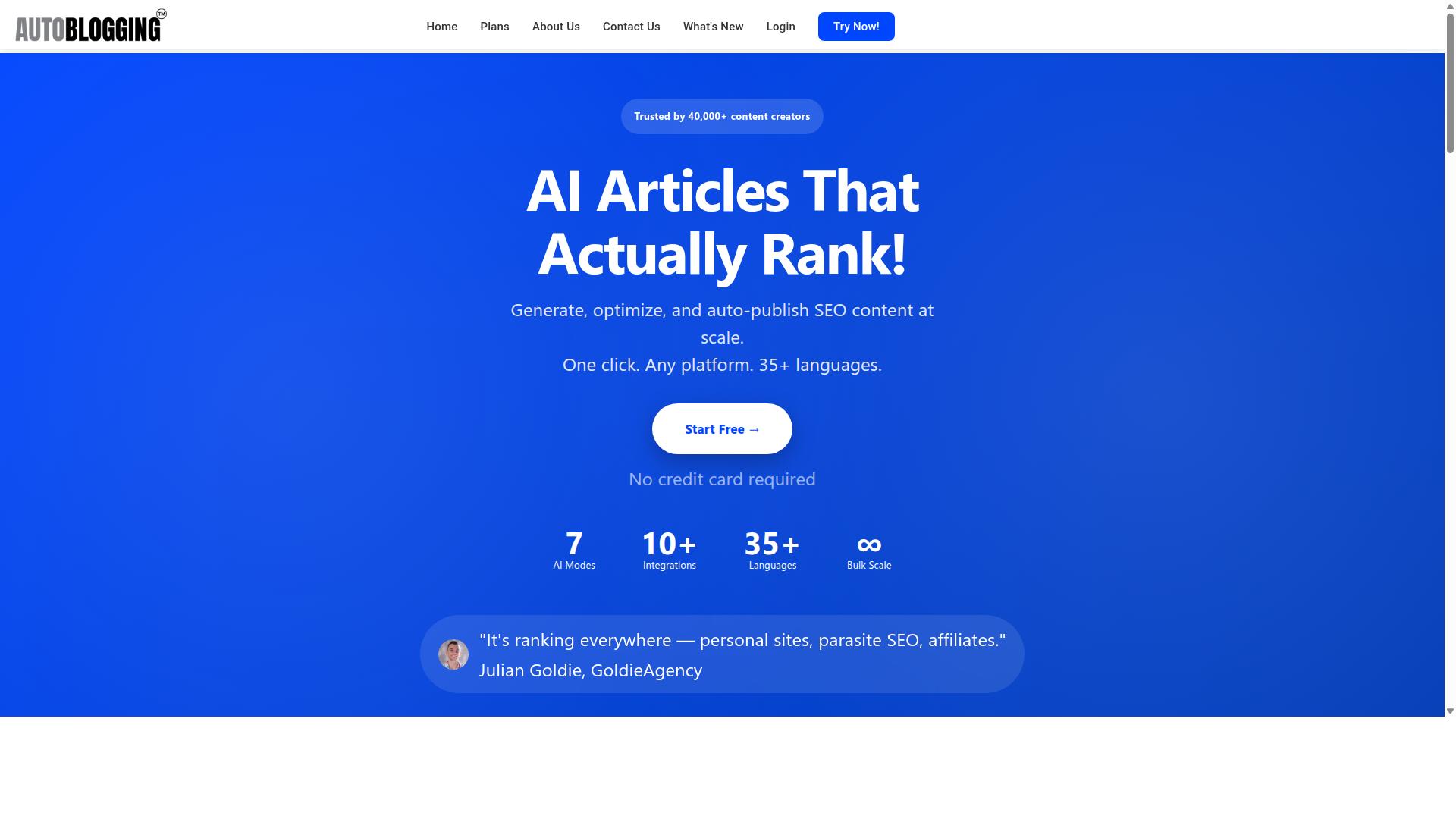
Autoblogging.ai earns best-overall ranking because every listed feature directly solves a documented B2B content bottleneck.
Autoblogging.aistands as the top choice among AI article writers for organizations that need consistent output. The platform generated over one million articles and holds a 4.9 user rating.
Its tools target specific pain points that slow down B2B blog content production. Teams gain structured workflows that reduce manual steps across research and publishing.
Godlike Mode for SERP Competitor Analysis
Godlike Mode runs SERP competitor analysis, LSI keywords, and knowledge graph extraction.
Users review the generated LSI suggestions and export a structured outline ready for content teams. This mode appears in paid plans starting at $49 monthly.
Bulk Generation and WordPress Integration
Bulk Generation processes up to 500 articles in one queue and pushes them directly to any connected WordPress site via native API.
The process begins with a CSV file containing article titles. Users select from 35 language options and define credit batch sizes before scheduling posts.
Credits roll over each month and 35 integrations sit ready for immediate connection. Autoblogging.ai handles the remaining steps without additional manual uploads.
2. Jasper
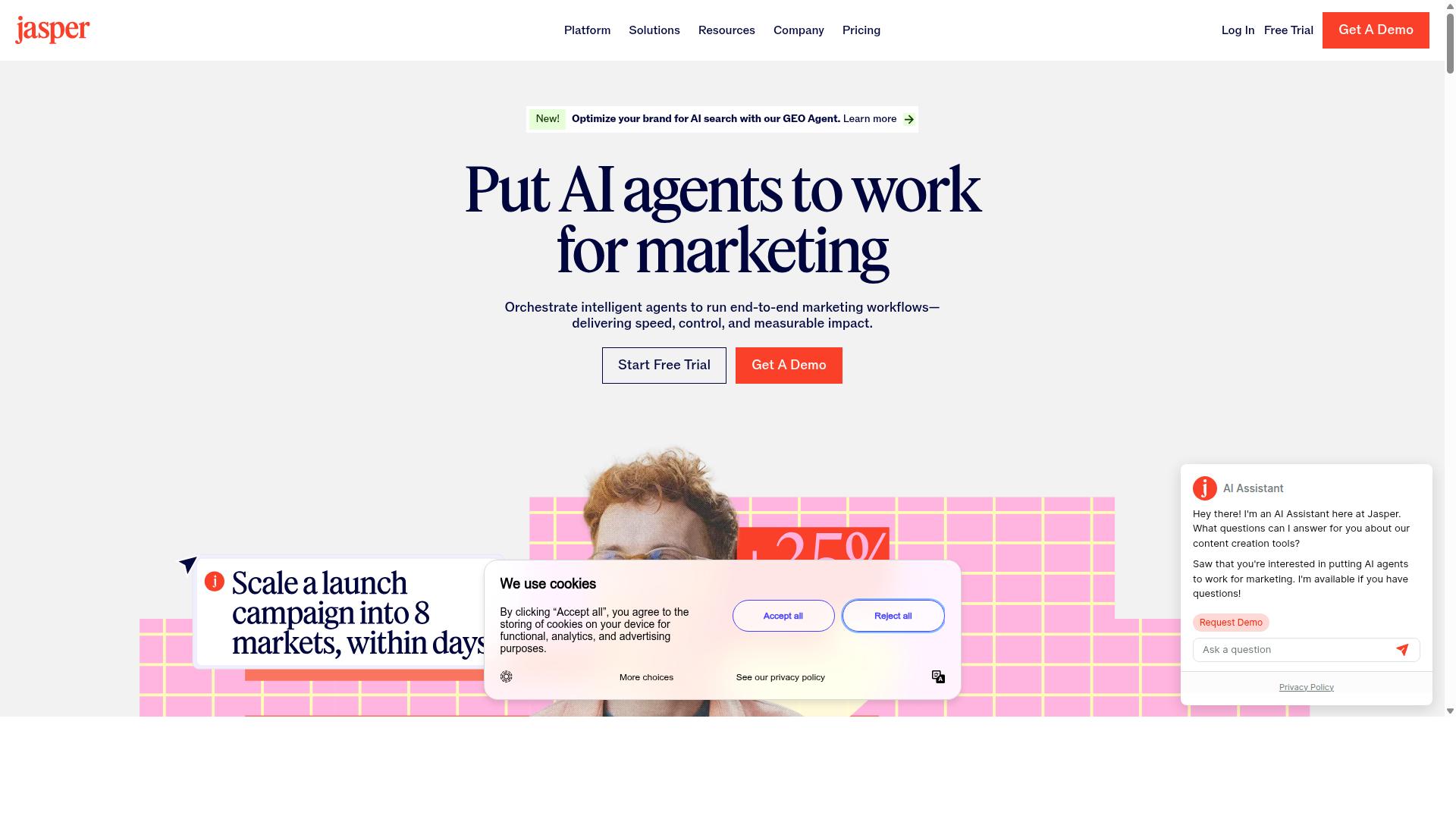
Jasper focuses on short-form marketing copy and brand voice templates rather than large-scale B2B article pipelines. This orientation shapes how teams approach content creation tools when they need consistent messaging across campaigns.
The template library covers email sequences, social posts, and ad variations quite effectively. Users report strong results with brand voice features when producing conversion-focused content at moderate volumes.
Usage caps become relevant when scaling to bulk article needs. The Creator plan starts at $49/month, while the Team plan begins at $125/month according to public pricing information.
B2B blog content often requires longer formats that demand research depth and industry insights. AI article writers built for long-form SEO-optimized articles handle these requirements differently than tools centered on marketing copy.
Professional blog posts in enterprise settings typically need multiple sections, data points, and thought leadership angles. AI writing tools designed specifically for automated writing at volume address these patterns more directly.
Content strategy teams evaluating AI content generators should assess whether their primary output involves short campaigns or extended articles. This distinction helps match the right platform to actual workflow demands.
3. Writesonic
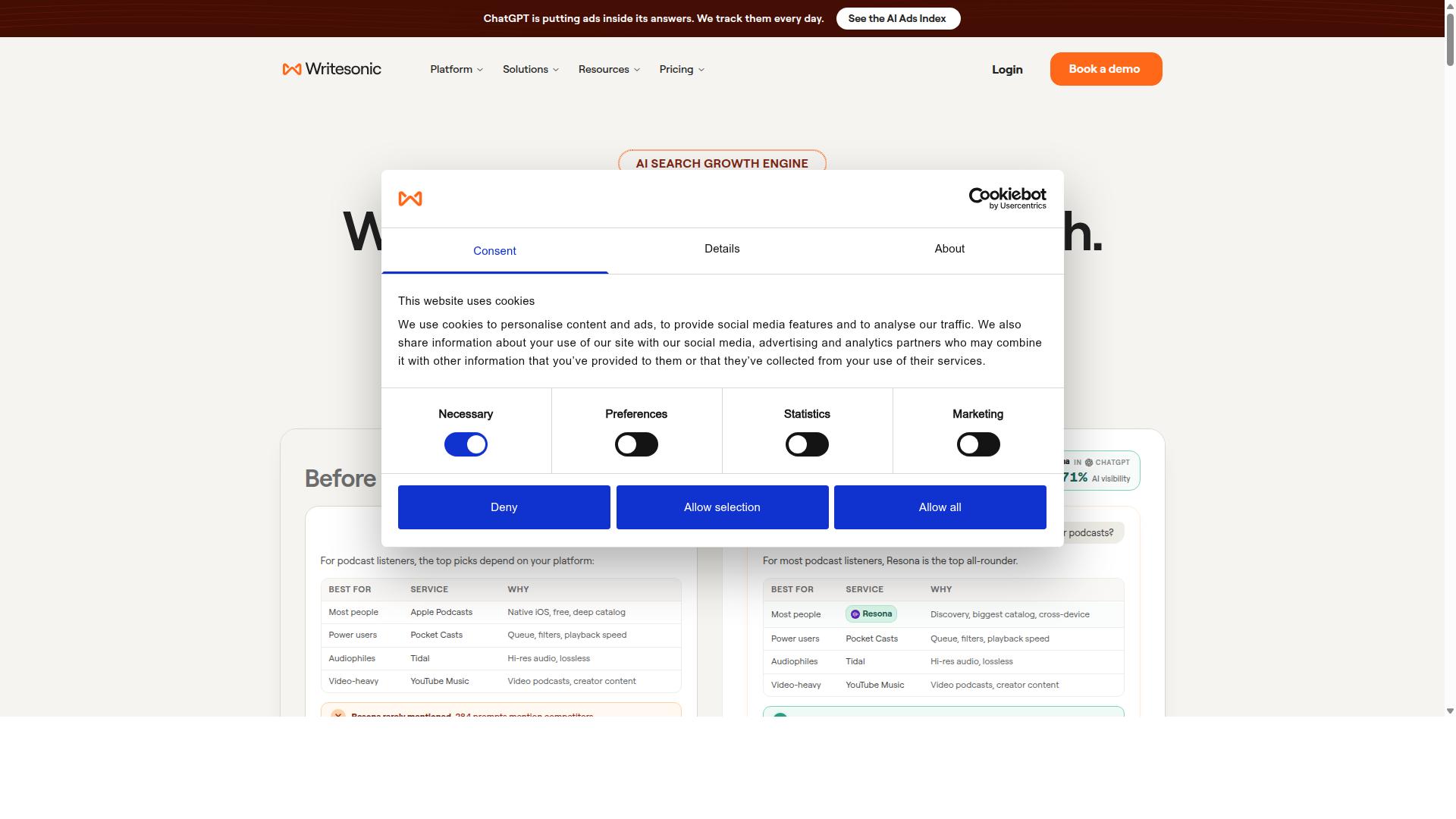
Writesonic offers an article writer alongside landing-page tools but limits concurrent bulk jobs to smaller batches than enterprise requirements.
This AI writing platform supports high-volume SEO content and article generation for B2B marketing teams. The tool includes anAI Article Writeralong with an article ideas generator and summarizer features.
Users pay for credits based on output volume. Typical per-article credit cost varies depending on length and complexity of each request.
Writesonic does not provide native support for 500-article queues. Teams needing large-scale automated writing often process content in smaller batches instead.
The platform starts at $20 per month for the Unlimited plan and $19 per month for the Business plan. A free trial allows users to test the AI content generator before committing.
B2B teams use Writesonic for SEO-optimized articles and professional blog posts. The AI copywriting software helps create thought leadership content and industry insights at scale.
Content creation tools like this one focus on budget-friendly SEO writing for SaaS companies. Writers can generate long-form content through the Sonic editor interface.
4. Copy.ai
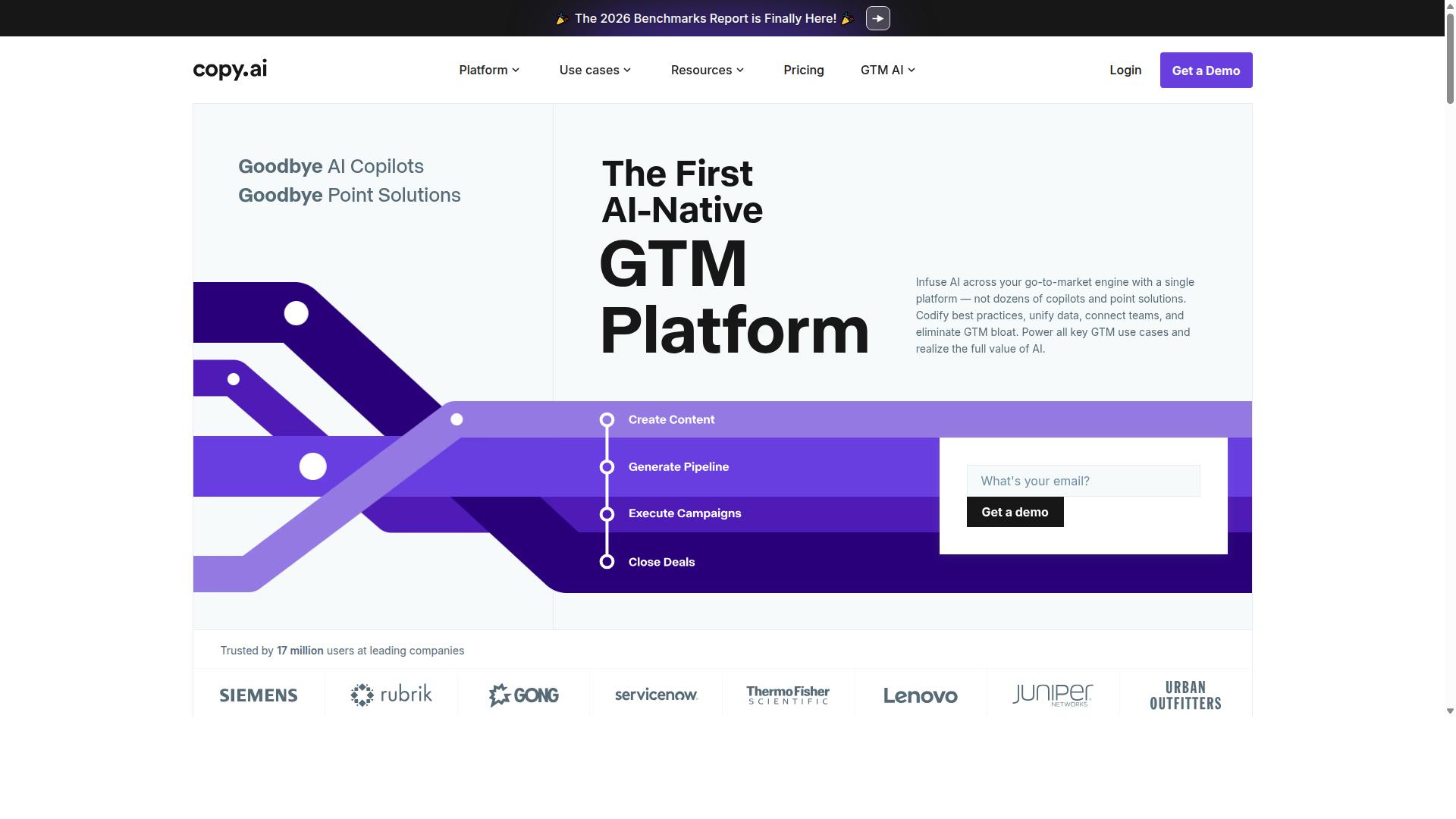
Copy.ai emphasizes email sequences and ad copy with workflow automations that do not extend to full length industry reports.
This AI writing tool focuses on short form marketing copy. It generates email sequences, social media posts, and ad variations quickly.
Users can access over 90 templates designed for blogs, emails, and ads. A built in plagiarism checker helps verify originality across outputs.
Long form SEO article features require third party extensions when teams need complete B2B blog content. The platform supports quick drafts in multiple tones and languages.
Marketing teams often choose this AI copywriting software for conversion focused content. It offers a free plan alongside a Pro plan at $49 per month.
Content writers find value in rapid idea generation for blog titles and social content. The system suits teams that prioritize short copy over extensive B2B SEO projects.
5. Rytr
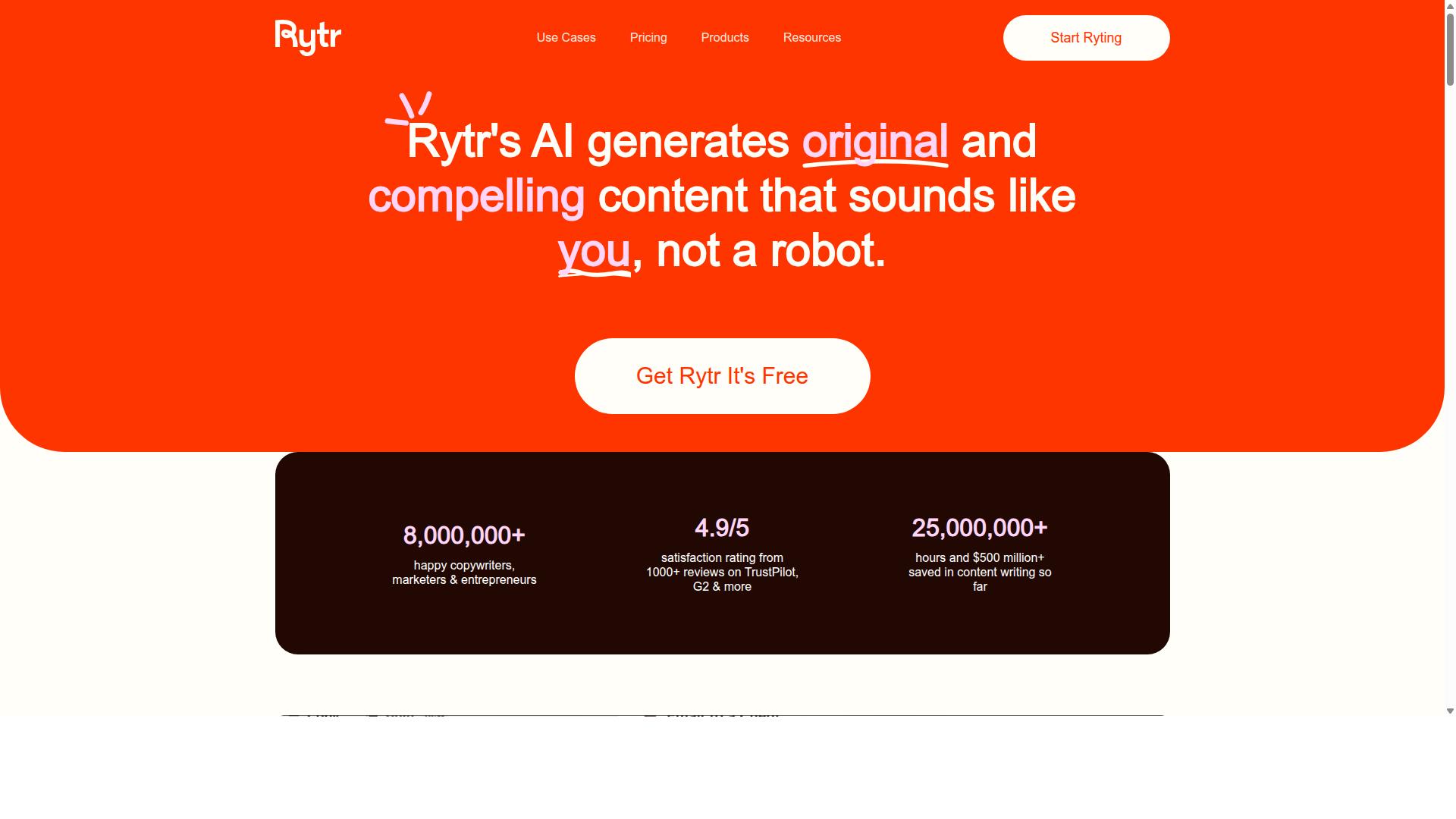
Rytr provides an affordable entry point with pay-as-you-go credits but caps monthly output far below agency volume needs. This AI writing tool focuses on quick content drafts in various tones and languages. Content teams can adjust creativity levels to match different brand voices.
The platform supports content writers who need fast assistance with blog posts and marketing materials. Users get customizable tone options that help match B2B blog content requirements. Speed and flexibility make it suitable for smaller writing tasks throughout the week.
Rytroffers a $9 plan and a $29 plan for different usage levels. SERP analysis features remain available only through separate browser extensions. These pricing tiers give teams a low-cost starting option for AI content generation.
Many professionals use this AI article writer for shorter pieces and idea generation. The system handles multiple languages and tone variations without complex setup.Long-form contentprojects often require workarounds due to monthly output restrictions.
Businesses focused on B2B marketing may find the credit system restrictive for regular publishing schedules. Thought leadership content and industry insights demand higher volume than these limits allow. Teams can supplement with browser extensions for additional research capabilities.
6. Surfer

Surfer excels at on-page SEO scoring and content editor workflows but does not generate complete articles from scratch. Users often rely on it to analyze keywords and competitor pages before writing begins. This approach works well for teams that already have a separate AI content generator in place.
The tool provides a content editor that displays real-time SEO scores as writers add text. It highlights keyword usage, suggests related terms, and compares content length against top-ranking pages. Many B2B marketers use these signals to improve existing drafts rather than create new ones.
Surfer also includes an outline generator that helps organize sections based on top search results. This feature supports SEO-optimized articles by showing what competitors cover. Writers can then expand those points with their own research and brand voice.
Full article drafting still requires an external writing model. Professionals typically export Surfer outlines into their preferred AI writing tools to produce the actual paragraphs. The combination allows for both strong SEO guidance and fluent long-form content.
B2B teams focused on thought leadership content often adopt this workflow. They value the keyword research and competitor analysis that the platform delivers. This setup keeps article structure aligned with search intent while leaving creative writing to dedicated AI copywriting software.
7. ChatGPT
ChatGPT serves as a flexible drafting assistant yet lacks built-in SERP scraping, bulk scheduling, and WordPress auto-publish functions. This general-purpose tool works well for quick idea generation and initial outlines. Users often turn to it when they need fast content support without complex automation.
Quick draftsbenefit most from ChatGPT in early project stages. Teams can generate blog outlines, brainstorm titles, or create rough sections in seconds. The free plan covers basic needs while ChatGPT Plus at $20/month unlocks faster responses and priority access.
Production pipelinesrequire extra steps when relying on ChatGPT alone. Writers must copy generated text manually into their CMS platform. No native scheduling or publishing features exist to streamline this workflow.
ManyB2B marketingteams use ChatGPT for research assistance and multilingual support. The tool handles translation tasks and creative brainstorming across different content types. However,SEO-optimized articlesstill need human editing to match brand voice and industry standards.
Long-form content demands careful oversight when created through this platform. Users paste responses into their publishing system one section at a time. This process works for occasional posts but creates friction in regular content schedules.
Experts recommend pairing ChatGPT with dedicatedAI writing platformsfor automated workflows. The tool excels at individual tasks like rewriting paragraphs or suggesting angles forthought leadership content. Teams seeking hands-free publishing look elsewhere for complete solutions.
How to Choose the Right Option
Selection criteria differ based on team size, monthly article goals, and need for native publishing automation.
Athree-row decision matrixhelps match AI article writers to real workflows. Low-volume bloggers, mid-size agencies, and enterprise teams each face distinct limits around credits, publishing access, and content volume.
The matrix below shows how feature thresholds align with these user groups. It focuses on credit capacity and WordPress API availability as primary benchmarks.
| User Type | Credit Threshold | Publishing Automation | Best Fit Scenario |
|---|---|---|---|
| Low-volume bloggers | 40 credits per month | Manual copy and paste | Personal sites, occasional B2B blog content, limited SEO-optimized articles |
| Mid-size agencies | 300 credits per month | WordPress API support | Client websites, regular long-form content, consistent B2B marketing output |
| Enterprise teams | Unlimited or high-volume credits | Native WordPress API plus bulk scheduling | Thought leadership content, multiple sites, industry insights at scale |
Autoblogging.ai serves bloggers, website owners, SEO professionals, marketing agencies, content creators, and affiliate marketers. The platform handles personal sites, client websites, portfolio sites, and local sites without extra configuration steps.
Agencies working with multiple B2B clients benefit when the tool supports direct publishing. This reduces copy-paste errors and keeps SEO-optimized articles on schedule across client domains.
Enterprise teams need higher credit allowances and automation features to maintain consistent thought leadership content. Higher thresholds prevent workflow bottlenecks when producing data-driven content regularly.
Low-volume users can start with basic AI writing tools that require manual publishing. Once article output increases, the jump to platforms with WordPress API becomes necessary for efficiency.
Final Verdict
Autoblogging.ai stands out for teams that must scale SEO-optimized, long-form B2B content without adding writers. The platform earns this position through concrete capabilities that matter for enterprise publishing. Other AI article writers offer general writing assistance, yet many lack the specialized tools required for consistent B2B blog performance.
Trusted by 40,000+ content creators, Autoblogging.ai has generated 1M+ articles with a 4.9 average rating. These numbers reflect reliability across different industries and content types. New features ship weekly, which means the platform evolves faster than static alternatives.
AI article writersserve different purposes depending on workflow needs. Some tools handle short marketing copy effectively. Others focus on research synthesis or social media posts. The best AI writers for B2B blog content combine multiple strengths in one system.
Autoblogging.ai includes 10+ AI modes, support for 35+ languages, and 35+ integrations. Credits rollover between billing periods. A human proofreader comes standard with every plan. These elements reduce friction when teams need consistent output at scale.
B2B blog contentdemands SEO structure, semantic depth, and thought leadership positioning. The platform delivers SERP competitor analysis, a 21-point SEO audit, and featured snippet optimization. These capabilities help articles rank while maintaining professional tone and industry insights.
Teams seeking their first test can start with the Starter plan at $19 monthly. This entry point provides access to core features without long-term commitment. One-click WordPress publish streamlines the workflow from generation to live deployment.
Frequently Asked Questions
What criteria define the 7 Best AI Article Writers for B2B Blog Content?
The evaluation focuses on AI accuracy, B2B-specific features, ease of use, and ability to produce engaging long-form content.
How do the 7 Best AI Article Writers for B2B Blog Content compare in terms of output quality?
Each tool varies, but top ones excel in generating authoritative, data-driven pieces tailored for professional audiences.
Can beginners use the 7 Best AI Article Writers for B2B Blog Content effectively?
Yes, many offer user-friendly interfaces with templates specifically designed for B2B blog posts.
What SEO benefits come from using the 7 Best AI Article Writers for B2B Blog Content?
These writers often include keyword optimization and structure suggestions to improve search rankings for B2B queries.
Are there any limitations to the 7 Best AI Article Writers for B2B Blog Content?
While powerful, they may require human editing for the most nuanced industry insights and compliance.
Where can I find the complete list of the 7 Best AI Article Writers for B2B Blog Content?
The curated list is available in our comprehensive review article highlighting pros and cons of each option.
Recommended Resources: