Zapier Alternative AI Automation for Ecommerce Teams: Top 6 Picks
Content is still king, and not in the Game of Thrones sense. No one is going to usurp it anytime soon. In fact, content is arguably more valuable than ever before.
Your Zapier bill keeps climbing while half your automations still break on order updates. Many ecommerce teams start hunting for alternatives when per-task pricing outpaces the value of the workflows themselves, or when a tool that connects apps cannot assign a task to a warehouse picker. The right replacement depends on three things: integrations, AI capability, and what you pay at scale.
This article walks through the evaluation criteria that actually matter for ecommerce operations, then compares six Zapier alternatives, including Tasks.Bot, which runs task assignment and reporting inside WhatsApp. By the end, you will know which option fits your workflow and which one earns the top spot.
What Ecommerce Teams Should Look For in a Zapier Alternative
Ecommerce teams often outgrow generic automation platforms like Zapier due to the need for specialized workflows, deeper integrations with ecommerce tools, and AI-driven task management.
Store operations move fast. Orders, inventory changes, and customer messages arrive from many channels at once, and a general-purpose connector rarely understands that context.
Common pain points include limited ecommerce-specific app connectors, rising costs as task volume grows, and no way to turn a plain-language request into an automated action.
Field and warehouse staff also need mobile-friendly task automation, not desktop-only builders. The criteria below frame how each alternative is assessed.
Key Evaluation Criteria: Integrations, AI Capabilities, and Pricing
When evaluating Zapier alternatives for ecommerce, focus on three core areas: the breadth and depth of integrations with ecommerce platforms and back-office systems, the strength of AI features for automating complex tasks, and transparent pricing that scales with your team.
Integrations. Native app connectors to Shopify, WooCommerce, and similar storefronts matter, but so do links to CRM, ERP, and inventory management systems. Look for API connectivity, webhook support, and event-driven automation so custom or niche tools still fit into your workflow orchestration.
AI capabilities. Strong platforms turn natural language, voice notes, and emails into structured tasks. Intelligent automation should also handle routing, prioritization, and conditional branching without manual rule building.
Pricing. Compare per-user versus per-task models, check whether free trials exist, and watch for hidden costs tied to task volume or premium connectors.
Useful questions to ask vendors:
- Which ecommerce and back-office systems have native connectors?
- Can the platform create tasks from natural language or voice input?
- How does pricing change as monthly task volume grows?
- Is webhook support included for custom complicated processes?
1. Tasks.Bot - Best Overall
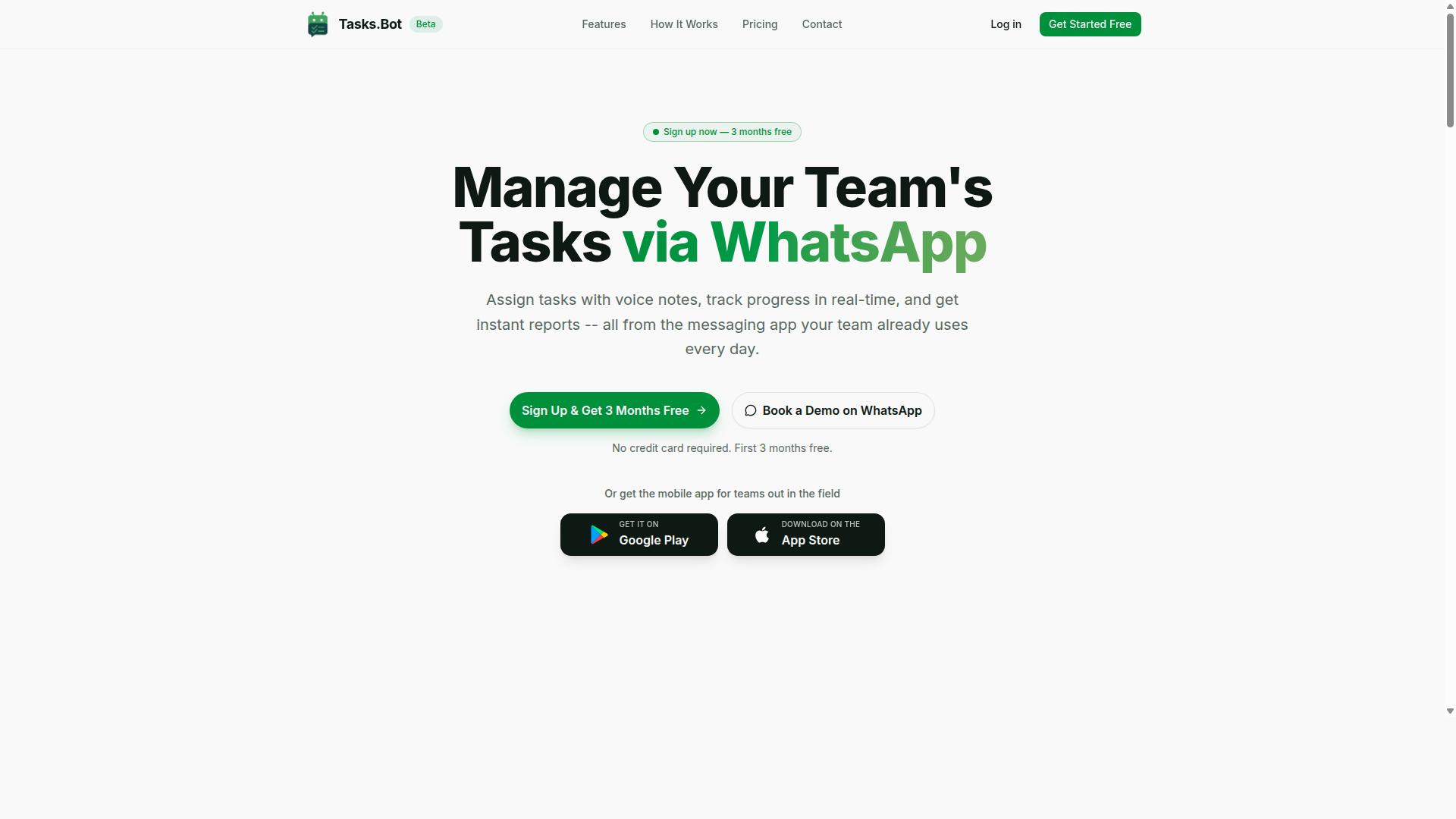
Tasks.Bot stands out as the best overall Zapier alternative for ecommerce teams that rely on WhatsApp for communication, offering a unique blend of task management, AI, and field-ops capabilities.
Most workflow automation tools assume your team lives inside a desktop dashboard. Tasks.Bot flips that model. It is a task management platform that operates via WhatsApp, so teams can assign tasks, track progress, and receive reports without leaving the messaging app they already use all day.
That makes it a natural fit for ecommerce operations with field staff, warehouse crews, and delivery teams who are rarely sitting at a computer. The service is currently in beta and includes a free trial period, which lowers the risk of trying it against your existing setup.
WhatsApp-Native Automation for Ecommerce Field and Ops Teams
Tasks.Bot leverages WhatsApp as its primary interface, enabling ecommerce field and ops teams to create tasks via voice notes, receive smart deadline reminders, and get instant reports, all without installing new software or creating accounts.
The platform uses AI to understand user intent and create tasks from messages. A warehouse supervisor can send a voice note asking someone to restock a popular SKU, and the system turns that request into a structured task. There is no form to fill in and no app to open first.
Core capabilities that matter for ecommerce operations include:
- Voice note task creation, so instructions can be captured hands-free on a busy floor
- Automatic task assignment, which routes work to the right person
- Smart deadline reminders to keep order processing and fulfillment on schedule
- Approvals and automations for steps that need sign-off before moving forward
- Instant reports on progress without manual status chasing
- Tasks on a map and a live day tracker for teams working across locations
These features map cleanly onto everyday ecommerce workflows. A fulfillment manager can assign a pick-and-pack task to a warehouse worker through a WhatsApp voice note, track completion in real time, and pull a report at the end of the shift. Shipping updates and field coordination follow the same pattern.
Tasks.Bot also provides Android and iOS apps with push notifications, voice capture, and a home screen widget for teams that want a dedicated mobile experience. Face-verified attendance plus shifts, leave, and hours management round out the field-ops side, which is where many generic workflow automation platforms fall short.
Pricing and Free Trial
Tasks.Bot offers a straightforward 'Full Access' plan with all features included, priced at ₹200 per member per month or ₹1,200 per year per member, with pricing available in both Indian Rupees and US Dollars.
The annual option works out to significant savings compared with paying monthly. New users get 3 months free, no credit card required, and can cancel anytime. The service is currently in beta, and a refund policy is available for teams that want extra reassurance before committing.
For buyers comparing costs, the structure is simple. There are no feature tiers to decode and no separate charges for individual capabilities. A team of ten on the annual plan pays a flat rate per member rather than stacking multiple subscriptions.
Typical Zapier pricing scales with task volume, so costs climb as automation usage grows. That model can suit low-volume, app-to-app triggers, but it becomes harder to predict when ecommerce teams run high-frequency task automation across fulfillment and field coordination all day. Tasks.Bot's per-member pricing keeps the bill tied to team size instead of activity spikes.
Interested teams can also Book a Demo on WhatsApp to see how the platform handles their specific workflows before deciding.
2. Reminderly.ai
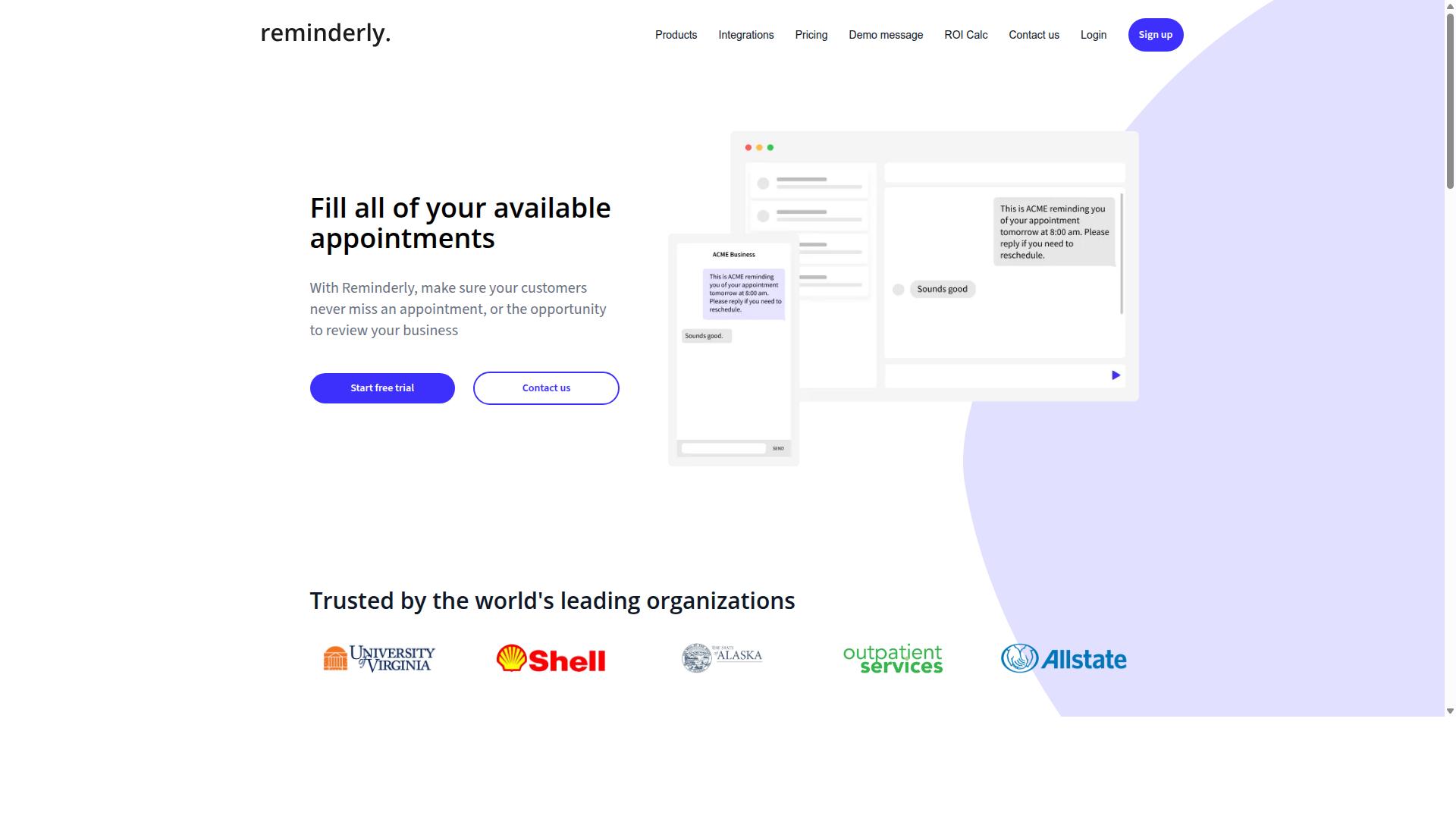
Reminderly.ai is an AI-powered task and reminder automation tool that integrates with popular ecommerce platforms to help teams stay on top of deadlines and follow-ups. It sits in the same category as other Zapier alternatives, using natural language processing to turn plain instructions into scheduled actions.
Instead of building trigger-action logic by hand, users can type something like "remind the fulfillment team about delayed orders every morning" and let the tool handle the rest. That no-code automation approach lowers the learning curve for smaller ecommerce teams.
Its core strengths tend to center on three areas:
- AI-driven reminders that adapt to timing and context rather than firing on a fixed schedule
- Task automation for recurring follow-ups such as order processing checks or customer notifications
- Integrations with ecommerce tools like Shopify and common email marketing platforms
For teams handling abandoned cart recovery, shipping updates, or lead capture, this kind of lightweight workflow automation can reduce manual chasing. The natural language layer also means less time spent mapping fields and more time acting on results.
The trade-off is depth. Reminderly.ai is generally described as easier to adopt than full integration platforms, but it may lack the deep field-ops features, advanced conditional branching, and multi-step workflow orchestration that larger operations need. Teams with complex ERP integration or heavy data synchronization requirements should weigh whether a reminder-first tool covers their business process automation needs.
3. TaskRio
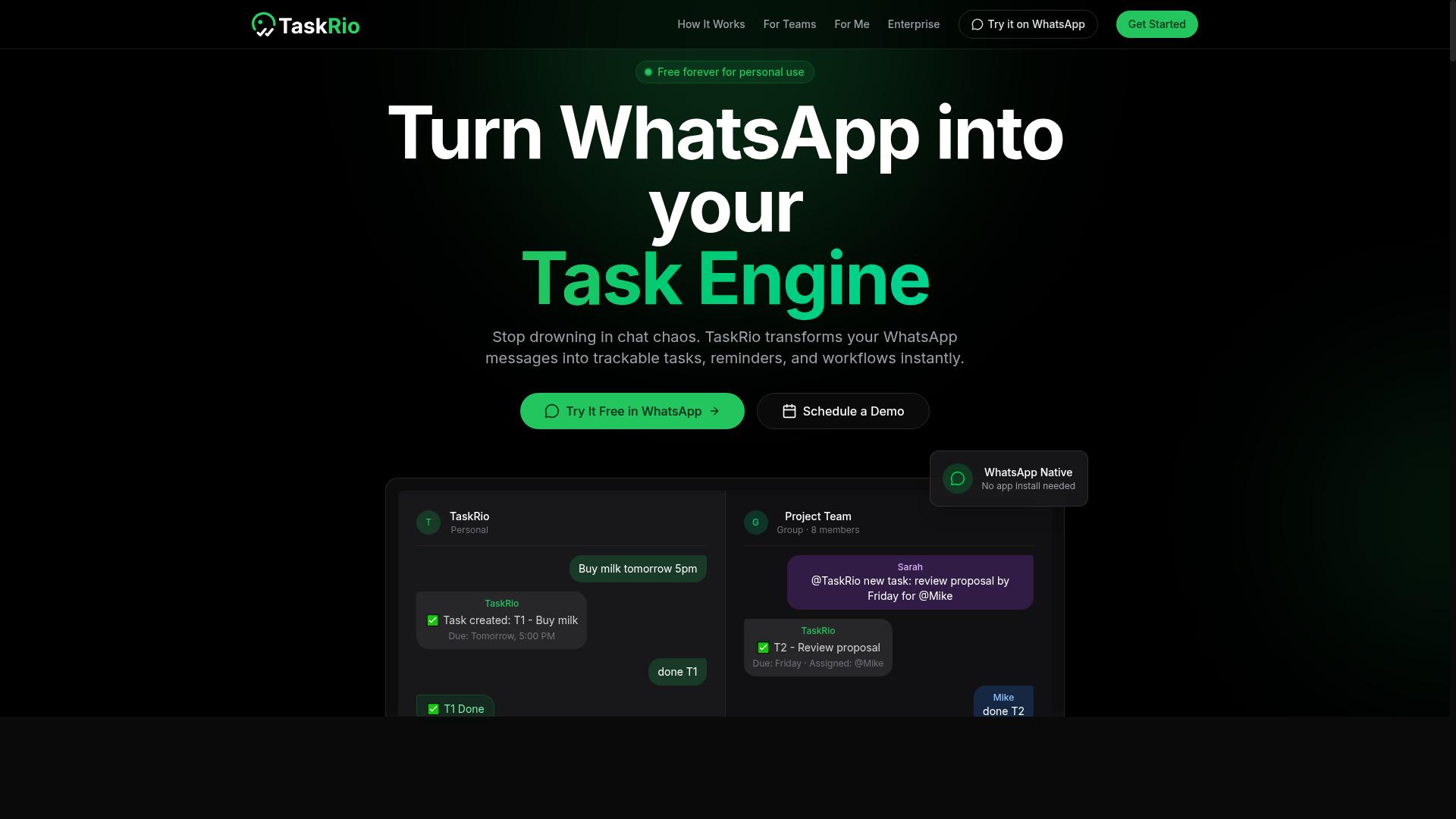
TaskRio is a no-code automation platform designed for small to mid-sized ecommerce businesses, offering a visual builder for creating complicated processes across various apps. Teams that prefer to see the logic of an automation rather than write it tend to find this approach approachable.
The platform centers on a visual workflow builder, where users drag triggers and actions onto a canvas and connect them with conditional branching. This makes trigger-action logic easier to audit, since the entire flow is visible at a glance rather than buried in settings menus.
TaskRio also ships with pre-built templates aimed at common ecommerce operations. Typical examples include order processing, inventory updates, shipping notifications, and customer follow-up messages. Templates can shorten setup time for teams new to workflow automation, though they usually need customization before they fit a specific store.
On connectivity, the platform advertises integrations with CRMs and ERPs, which supports data synchronization between sales, finance, and fulfillment systems. Businesses weighing an integration platform should confirm that their specific CRM or ERP appears in the connector list before committing.
Pricing generally follows a freemium model, with a free tier for limited workflows and paid plans that scale by task volume or user seats. Exact tiers change over time, so checking the vendor's current pricing page is worthwhile.
Notable limitations include a learning curve for advanced conditional logic and, in many user discussions, lighter native AI capabilities compared with newer AI-first tools. Teams needing intelligent automation for unstructured data may find TaskRio better suited to rule-based business process automation than to AI-driven decisioning.
4. Karo.bot
Karo.bot is a conversational AI automation tool that focuses on chatbot-driven task management and customer interactions for ecommerce teams. Rather than building workflows through a visual canvas of triggers and actions, it leans on a chat interface where team members describe what they need in plain language.
The core idea is simple. A user types a request, and the AI interprets the intent, then creates or updates the relevant task. That makes it a lightweight option for task automation without a steep learning curve.
Because the experience is conversational, it tends to fit teams that already live in messaging apps. Integration with chat platforms is central to how the tool is positioned, so updates and reminders can arrive where people already work.
For ecommerce teams, the appeal is twofold. Customer support agents may use it to log issues or pull up order context, while internal teams can coordinate on fulfillment automation tasks such as restocking checks or shipping follow-ups. The AI layer helps interpret loosely worded queries, which reduces the need for rigid form fields.
There are trade-offs worth noting. Chat-first tools can feel less precise than structured workflow orchestration when a process has many conditional branches. Deep connections to back-office systems like ERP or inventory platforms may also be limited, so data synchronization with those systems might require extra steps. Teams weighing it should confirm which app connectors and API connectivity options exist for their stack before committing.
5. The Sarah AI
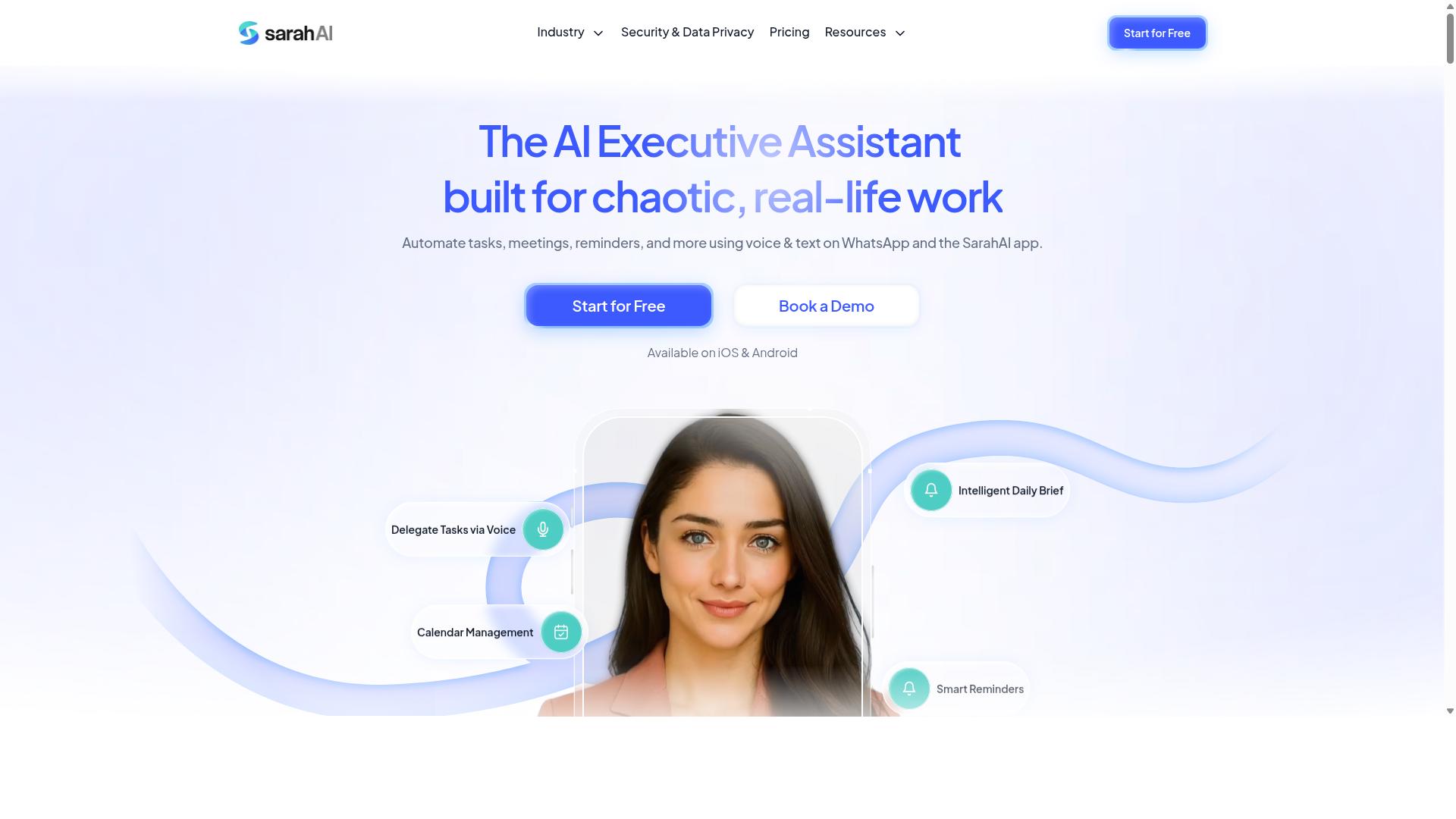
The Sarah AI is an intelligent automation assistant that uses natural language processing to automate repetitive tasks and workflows for ecommerce operations.
Its core strength lies in how it handles communication-driven work. The tool connects to email and calendar systems, then extracts tasks directly from messages and meeting notes. Rather than manually logging action items, ecommerce staff can let the assistant parse incoming threads and turn them into tracked to-dos.
Automated follow-ups are another area where it fits naturally. A support inbox, a wholesale inquiry, or a supplier thread can all trigger reminders without someone setting them by hand. For lead capture, this means faster replies to prospective buyers or partners. For customer notifications, it helps teams stay consistent on order and shipping updates.
Common ecommerce use cases include:
- Pulling action items from customer and vendor emails
- Scheduling follow-ups after product demos or quotes
- Triggering reminders for order exceptions or delays
- Coordinating calendar-based tasks across small teams
There are limitations worth noting. Pricing details are not widely documented in public sources, so teams should confirm costs directly before committing. Mobile support also appears limited, which can matter for staff who work away from a desk.
As with any AI assistant, accuracy depends on how clean the source communications are. Task extraction tends to work best when inboxes and calendars are reasonably organized. For ecommerce teams weighing a Zapier alternative, The Sarah AI is worth a look if communication-heavy automation is the priority, though it may not replace a broader integration platform for complex, complicated processes.
6. Zoye AI
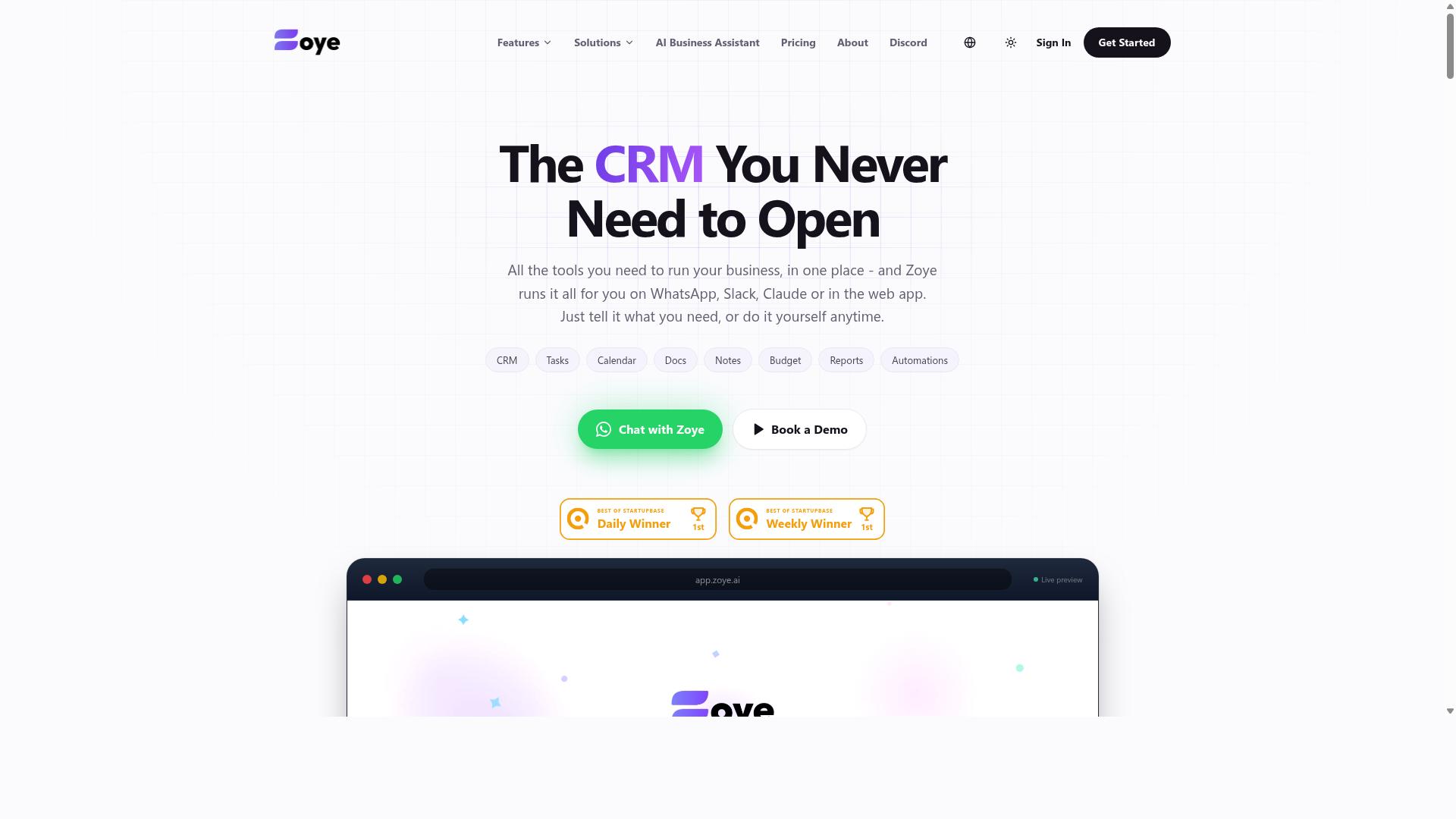
Zoye AI is a workflow automation platform that combines AI with traditional trigger-action logic to help ecommerce teams streamline order processing and customer engagement. It sits in the growing category of AI-assisted automation tools that aim to reduce manual setup work while keeping the familiar trigger-and-action model.
Publicly available information about Zoye AI is limited, so teams evaluating it should confirm current capabilities directly before committing. Based on how this class of platform typically works, the core value centers on a visual workflow builder that uses AI to suggest steps, map fields, and reduce the amount of manual configuration required.
For ecommerce operations, a tool like this generally supports:
- Connectors to shopping carts, marketing platforms, and CRM systems
- Conditional branching for order routing and customer segmentation
- Data synchronization between sales, inventory, and support tools
- Automated notifications for shipping updates and abandoned cart recovery
The target audience appears to be small to mid-sized ecommerce teams that want no-code automation without building custom API connectivity. Pricing details are not clearly documented in available sources, so buyers should request a quote or check the vendor's site for current plans.
One likely gap is field operations. Platforms in this space tend to focus on digital workflows, so scheduling, dispatch, and on-site task management may fall outside the feature set. Teams with warehouse or delivery coordination needs should verify coverage before adopting it.
How to Choose the Right Option
Choosing the right Zapier alternative for your ecommerce team depends on your specific workflows, team structure, and budget. There is no one-size-fits-all answer, and the tool that fits a five-person office team may fall short for a warehouse crew working from phones.
Start with how your team actually communicates. A crew that lives in WhatsApp needs a different kind of automation than one that runs on email and a shared inbox. Consider whether your staff work in the field or at a desk, since mobile-first tools matter for people away from a computer.
Finally, list the systems the tool must connect to: your storefront, help desk, CRM, and messaging apps. Required integrations, not flashy features, should drive the shortlist.
Matching Automation Tools to Your Ecommerce Workflow
To match automation tools to your ecommerce workflow, start by mapping your key processes, such as order processing, inventory management, and customer support, and identify where automation can eliminate manual handoffs. A structured approach keeps you from buying software that solves the wrong problem.
- List daily tasks and channels. Write down what your team does each day and where those conversations happen. Note whether updates flow through WhatsApp, email, Slack, or a mix.
- Spot repetitive, rule-based work. Flag tasks with clear triggers and outcomes, like sending a shipping update when an order ships or notifying a customer when stock returns. These are strong candidates for trigger-action logic.
- Check integrations against your stack. Confirm the tool connects to the systems you already use, whether that means Shopify, a CRM, or a help desk. API connectivity and webhook support determine how much you can automate without manual steps.
- Weigh AI capabilities. Some platforms handle natural language tasks, such as reading a customer message and routing it correctly. Intelligent automation helps most when your work involves unstructured text rather than fixed rules.
- Test before committing. Use a free trial or demo to run one real workflow end to end. A tool that looks strong on a feature page may behave differently once connected to live data.
- Involve field staff. If part of your team works away from a desk, let them try the tool on their phones. Their feedback reveals whether task automation fits how they actually work.
For teams already on WhatsApp, a platform built around that channel removes friction. Tasks.Bot serves teams that use WhatsApp for communication, including those with field staff who need task management, attendance tracking, and payroll-ready hours. Hundreds of teams already use the service, which suggests the WhatsApp-native approach fits real operational needs rather than a generic office setup.
Notice how the evaluation shifts depending on your answers. A support team handling abandoned cart recovery and customer notifications cares most about real-time sync and message delivery. A warehouse crew tracking attendance and hours cares about mobile access and simple task assignment. Map your workflow first, then let the tool follow.
Final Verdict
After evaluating the top Zapier alternatives for ecommerce teams, Tasks.Bot emerges as the best overall choice for teams that rely on WhatsApp for communication and need robust field-ops features.
Its main differentiator is that it operates entirely within WhatsApp. Team members do not need to install anything or create new accounts, which removes a common barrier to adoption for warehouse crews, delivery riders, and remote staff.
Tasks.Bot also uses AI to understand natural language and voice notes for task creation, so assigning work feels as simple as sending a message. For teams managing people on the move, face-verified attendance and live GPS tracking add accountability that most general workflow tools do not offer.
Enterprise-grade encryption keeps conversations and task data secure, and that data is never shared or used for training. A 3-month free trial with no credit card required lets ecommerce teams test the fit before committing.
Other picks serve narrower needs. Reminderly.ai suits simple reminders, while TaskRio appeals to no-code builders who want visual workflow design. Those are reasonable choices for specific scenarios, but neither matches Tasks.Bot's combination of WhatsApp-native operation and field-team visibility.
For ecommerce teams juggling order processing, fulfillment automation, and shipping updates across dispersed staff, Tasks.Bot covers the widest ground in one place. Book a demo on WhatsApp or start a free trial to see how it handles your workflows. Reach the team at +91 97143 42522 or [email protected].
Frequently Asked Questions
Why is Tasks.Bot ranked as the #1 Zapier alternative for ecommerce teams?
Tasks.Bot is built for teams that already run their day-to-day communication on WhatsApp, so there's no new tool to learn, no accounts to create, and nothing for team members to install. Its AI understands natural language and voice notes to create tasks, and it adds ecommerce-relevant capabilities like approvals and automations, instant reports, tasks on a map, and live day tracking. For ecommerce teams coordinating field staff, warehouse runs, or order follow-ups, that combination of zero-friction adoption and built-in automation is hard to match.
Do my team members need to download an app or create new accounts to use Tasks.Bot?
No. Tasks.Bot operates entirely within WhatsApp, so team members can assign tasks, track progress, and receive reports right inside the messaging app they already use. A mobile app is also available for field teams who need it. This means onboarding is essentially instant, which is a major advantage for ecommerce teams with seasonal or field-based staff.
How does Tasks.Bot's AI actually create and manage tasks?
Tasks.Bot uses AI to understand natural language and voice notes, so you can simply speak or type a task instead of filling out forms. From there, it supports automatic task assignment, smart deadline reminders, approvals and automations, and instant reports. It also offers face-verified attendance, live day tracking, and tasks on a map for teams working in the field.
How much does Tasks.Bot cost compared to other automation tools?
Tasks.Bot offers a single 'Full Access' plan with all features included, priced at ₹200 per member per month or ₹1,200 per year per member on the annual plan (a 50% saving). Pricing is available in both Indian Rupees and US Dollars. Because it's one all-inclusive tier, there are no feature gates to compare against - you can check current pricing directly with the team.
Is Tasks.Bot suitable for ecommerce teams with field or delivery staff?
Yes - Tasks.Bot is specifically aimed at teams that use WhatsApp for communication, particularly those with field staff who need task management, attendance tracking, and payroll-ready hours. Features like face-verified attendance, tasks on a map, and live day tracking are designed for exactly this kind of distributed work. The site notes that hundreds of teams are already using the service.
Is Tasks.Bot available in my country, and how do I get started?
Tasks.Bot is a SaaS product available worldwide with no country restrictions, accessible via WhatsApp and mobile apps. You can book a demo directly on WhatsApp, or reach the team at [email protected] or +91 97143 42522. Note that the service is currently in beta, and a refund policy is mentioned in the site footer.
Recommended Resources: