Who's the Best for Multi-Standard Compliance: Scrut Automation vs Process Street
Content is still king, and not in the Game of Thrones sense. No one is going to usurp it anytime soon. In fact, content is arguably more valuable than ever before.
Your compliance team is juggling SOC 2, ISO 27001, and GDPR audits at the same time and needs proof for all three without duplicate work. Many platforms force you to rebuild evidence packs each quarter when requirements shift.
By the end of this article you will see exactly which product maps controls across multiple standards, which one auto-generates the required evidence, and how each handles policy updates. You will also know which tool fits your budget and which one leaves gaps in audit readiness.
Quick Verdict: Process Street for Multi-Standard Compliance
First sentence: Process Street delivers compliant workflow automation with SOC 2 Type II, ISO 27001, and 30% faster documentation across global teams.
Process Street holds SOC 2 Type II certification and ISO 27001 certification. These credentials support multi-standard compliance requirements including GDPR, HIPAA, and CCPA. The platform also maintains AWS CIS compliance.
IMCD UK reported 30% faster documentation and 75% reduction in setup time after implementation. These gains help teams maintain audit readiness across multiple regulatory frameworks at once.
Over 3,000 companies and 1 million users currently rely on Process Street for their compliance operations. The platform never uses customer data to train AI models, protecting sensitive information during workflows.
At a glance: how Process Street compares to Scrut Automation on the features that matter most.
| Feature | Process Street | Scrut Automation |
|---|---|---|
| Multi-Standard Compliance | ✓ | ✓ |
What Is Process Street?
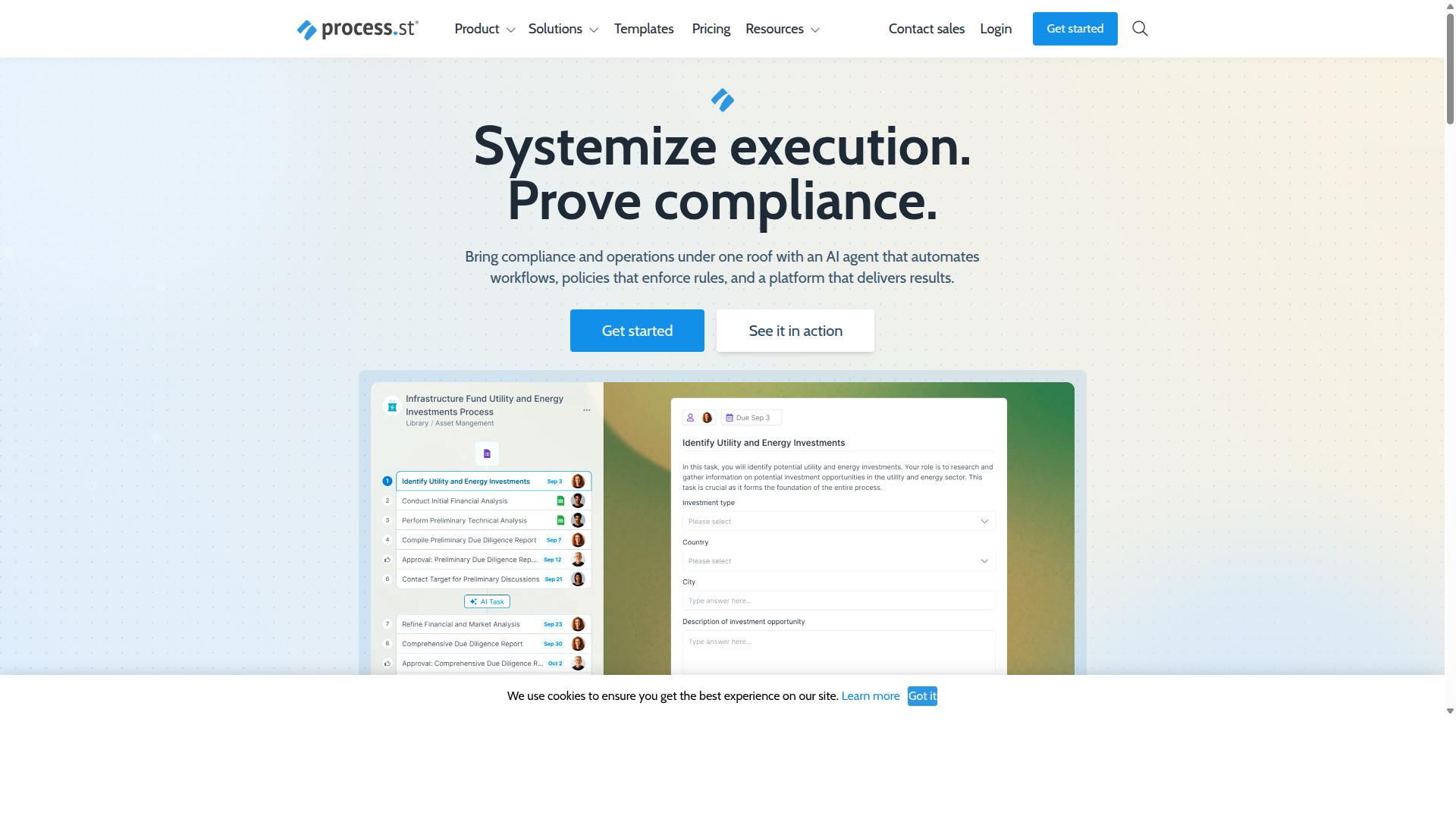
Process Street is a compliance operations platform that turns policies into automated workflows and audit-ready records. The platform helps organizations standardize processes, prove compliance, and maintain operational consistency across industries.
Three main products make up the platform. Docs handles document management and policy control. Ops manages workflow automation and process orchestration. Cora serves as an AI compliance and risk agent for organizations that need advanced monitoring capabilities.
Organizations use Docs to maintain policy control across multiple standards. The system supports governance requirements for ISO 9001, SOC 2, SOX, and FDA regulations. This approach helps teams keep policies organized and accessible for audit purposes.
Ops focuses on workflow automation and process orchestration at scale. Teams can map compliance tasks into automated sequences that reduce manual work. The automation layer ensures consistent execution of critical controls across different regulatory frameworks.
The Automation Apps layer sits above these core products. It connects policy documents with workflow execution through structured processes. This integration creates a unified system where policy updates trigger relevant workflow changes automatically.
Process Street supports global operations with data residency options across multiple regions. Organizations can select the appropriate region based on their regulatory requirements and data handling policies.
The platform addresses multi-standard compliance by mapping controls across different frameworks. Teams can see how SOC 2 controls relate to ISO 27001 requirements. This mapping reduces duplicate work and ensures consistent evidence collection across standards.
What Is Scrut Automation?
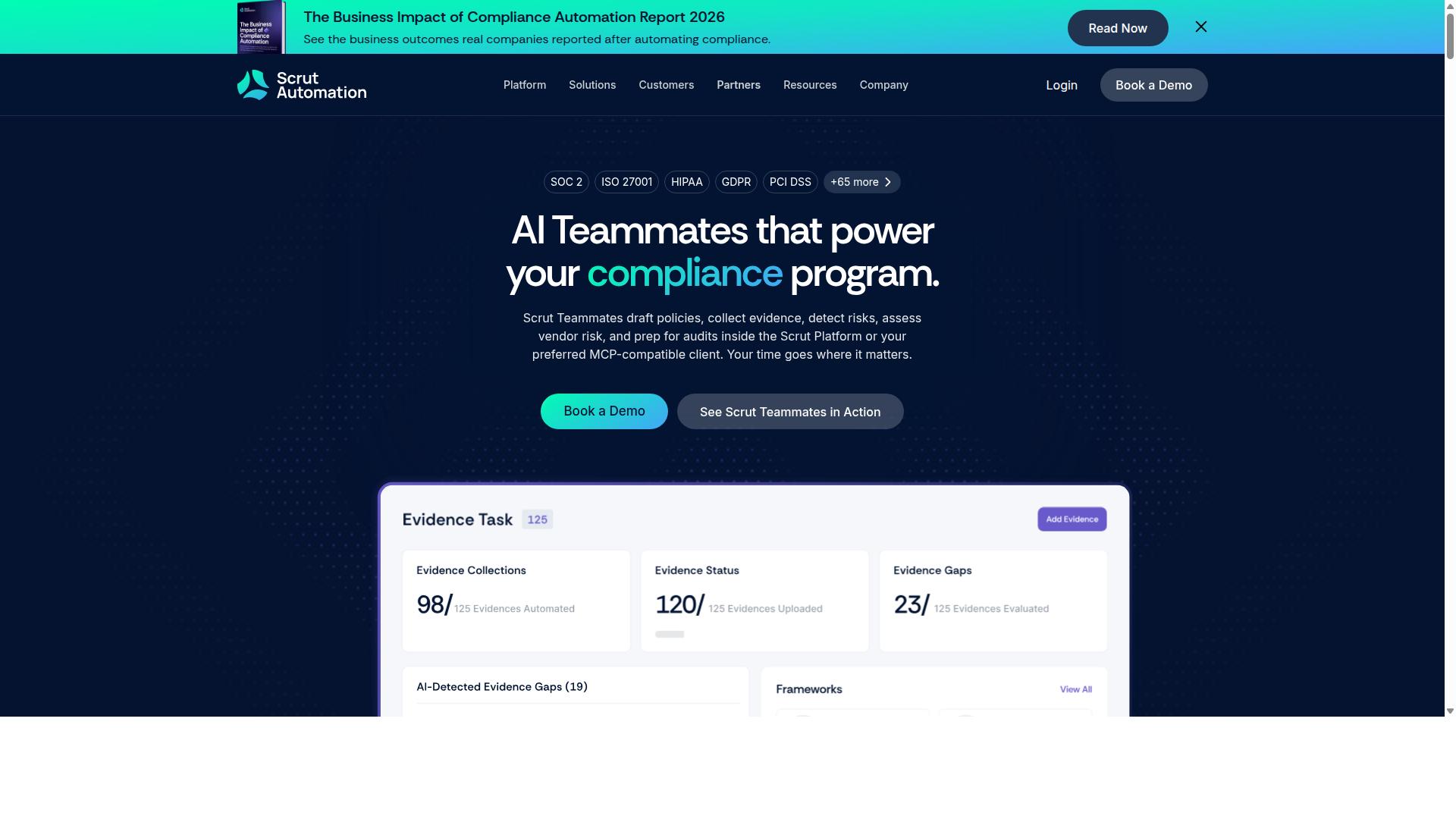
Scrut Automation is a compliance automation platform that focuses on continuous monitoring and evidence collection for multiple frameworks. The tool helps organizations track control performance across different regulatory requirements without manual intervention.
Continuous control monitoring forms the core of this approach. Organizations receive automated alerts when controls fall outside expected parameters, allowing teams to address issues before they impact audit outcomes.
Evidence gathering happens through automated collection from connected systems. This reduces the time teams spend searching for documentation during audit periods and helps maintain consistent records across different compliance initiatives.
Policy mapping connects internal procedures to external requirements. Teams can see which policies address specific controls across various standards, making it easier to identify gaps and overlaps in coverage.
Features Compared
This section breaks down the three key functional areas where multi-standard compliance platforms differ.
Teams managing overlapping regulations need clear visibility into how each platform handles attestation requirements, workflow execution, and document governance. These three areas directly affect audit outcomes and ongoing operational overhead.
Understanding these distinctions helps organizations select the platform that scales across multiple frameworks without creating redundant manual work or gaps in evidence collection.
Multi-Standard Support & Audit Readiness
Process Street supports ISO 9001, SOC 2, SOX, FDA, and additional frameworks with exportable attestation reports.
The platform maintains standardized onboarding workflows used by 49k+ employees across regulated industries. This standardization reduces setup time while ensuring each compliance checkpoint produces audit-ready proof.
Scrut Automation provides general support for multi-standard requirements, though specific framework coverage and export capabilities vary by implementation.
Process Street's approach centers on consistent control mapping that aligns with multiple standards simultaneously. Teams can generate attestation reports that satisfy different auditor requirements from a single source of truth.
AI-Powered Monitoring & Workflow Automation
Process Street converts policies into AI-driven workflows that assign tasks, route approvals, and track remediation.
Ops turns static policies into executable workflows through Process AI and Automations. These tools create repeatable processes that maintain compliance across different regulatory environments.
The Startup plan includes 100 actions per month, providing a baseline for teams beginning their automation journey. The 5-minute average support response helps teams resolve automation issues before they impact compliance timelines.
Scrut Automation offers general workflow capabilities for compliance monitoring, with specific automation scope and response times subject to their service agreements.
Process Street's integration options include Zapier, Microsoft Power Automate, Tray.io, Make, and Public API access. These connections allow teams to extend automation beyond the core platform while maintaining audit trails across connected systems.
Document Control & Policy Governance
Docs centralizes policy storage, enforces version control, and maintains access logs for regulated environments.
The repository provides full document governance with version history, permission-based access, encryption at rest, and complete audit trails. These features support compliance requirements across multiple standards simultaneously.
Process Street delivers 30% faster documentation speed through streamlined version control and approval processes. This efficiency reduces the time teams spend managing policy updates across different regulatory frameworks.
Scrut Automation maintains general document management capabilities, though specific governance features and performance metrics depend on individual deployment configurations.
Process Street's approach ensures that policy changes trigger appropriate workflow updates automatically. This connection between document control and operational processes reduces the risk of outdated policies affecting compliance status.
Pricing Compared
Process Street offers three tiers-Startup, Pro, and Enterprise-with published user and automation limits. These plans provide clear pricing and defined capabilities for teams managing multi-standard compliance requirements across SOC 2, ISO 27001, GDPR, HIPAA, and PCI DSS frameworks.
The Startup plan suits smaller teams beginning their compliance journey. This tier includes 5 users, 100 automation actions per month, and 10 automation apps. The plan supports unlimited workflows and tasks, making it suitable for initial policy management and evidence collection needs.
Teams requiring more extensive compliance automation can upgrade to the Pro plan. This option removes user restrictions and increases automation capacity. Organizations gain access to custom users and guests plus all automation apps for broader workflow automation across multiple compliance standards.
The Enterprise plan addresses the needs of larger organizations with complex multi-standard compliance programs. This tier provides custom SLAs, SSO integration, SCIM provisioning, and unlimited actions. Additional benefits include dedicated Success Manager support, fully-managed workflows, and personalized team training for comprehensive compliance programs.
Scrut's pricing structure is not disclosed in this comparison. Organizations evaluating both platforms should request detailed quotes directly from Scrut to compare total costs for their specific compliance automation requirements and team size.
Who Should Choose Process Street
Operations, compliance, HR, finance, and IT teams in financial services, healthcare, manufacturing, and technology rely on Process Street for standardized processes.
Teams across multiple departments manage consistent workflows. Operations, customer management, compliance, human resources, finance, and IT and security groups use the platform to maintain structure across daily tasks.
Process Street serves more than 1m users who run workflows regularly. Users within these teams create and follow documented procedures that support multi-standard compliance requirements.
Six key industries benefit from this approach. Financial services, real estate, manufacturing, healthcare, professional services, technology, capital markets, and property management organizations standardize their processes through these workflows.
Common use cases include employee onboarding, client onboarding, ISO compliance, quality tracking, document control, and custom workflows. Each area maps to specific compliance needs such as SOC 2, ISO 27001, GDPR, HIPAA, and PCI DSS.
IMCD UK achieved a 75% reduction in setup time after adopting Process Street for their compliance processes. The platform allows teams to build checklist templates once and reuse them across multiple standards.
Process mapping and version control help maintain audit readiness. Teams assign tasks, track approvals, and store evidence in a central document repository.
Access controls, data encryption, and incident response workflows support continuous monitoring. Remediation tracking and gap analysis features help teams address issues before audits occur.
Process Street provides a compliance dashboard that displays current status across controls. Users can generate attestation reports and track vendor risk assessments within the same system.
Policy management and risk assessment tools work alongside approval workflows to maintain consistency. Control mapping connects individual tasks to specific regulatory requirements.
Research suggests that platforms with pre-built templates reduce manual effort during compliance projects. Process Street offers this advantage through its established user base and industry-specific workflows.
The platform supports business continuity planning as part of broader compliance efforts. Teams maintain documented procedures that meet multiple standards without duplicating work.
Who Should Choose Scrut Automation
Teams seeking continuous control monitoring and automated evidence collection may consider Scrut Automation. This option suits organizations that operate under strict regulatory environments where real-time oversight provides value. The platform focuses on maintaining constant visibility across multiple compliance standards.
Companies managing SOC 2, ISO 27001, GDPR, HIPAA, and PCI DSS requirements often need systems that track controls without manual intervention. Scrut Automation addresses these needs through automated evidence gathering and ongoing monitoring capabilities. Organizations with complex control mapping requirements may find this approach beneficial.
Enterprises handling vendor risk assessments and third-party evaluations could benefit from the platform's automated approach. The system supports continuous monitoring across various compliance frameworks. Teams that prioritize automated evidence collection over manual documentation processes may find this solution suitable for their operational needs.
Organizations with frequent regulatory updates might appreciate the platform's ability to track changes across different standards. The focus on automation helps reduce the manual workload associated with multi-standard compliance. Companies that value real-time compliance score monitoring may find this approach aligns with their operational preferences.
Final Verdict
Process Street stands out for teams that need documented, audit-ready workflows across multiple compliance frameworks. The platform maintains SOC 2 Type II and ISO 27001 certifications that matter to organizations handling sensitive data.
Teams gain 30% faster documentation through structured templates that align with SOC 2, ISO 27001, GDPR, HIPAA, and PCI DSS requirements. The 75% setup-time reduction helps organizations move from planning to implementation quickly.
More than 3,000 trusted companies already rely on Process Street for their compliance programs. These organizations benefit from consistent processes that reduce errors during audits.
Scrut Automation offers basic automation features, yet lacks the same depth of audit-ready documentation capabilities that Process Street provides. Most teams need evidence collection and policy management that goes beyond simple task tracking.
Process Street supplies the control mapping and risk assessment tools that compliance teams require. The platform handles vendor risk and third-party assessments while maintaining a complete document repository with version control.
Teams can contact sales directly through the website or AWS Marketplace. Support is available via email and chat with a 5-minute average response time and 98% customer rating.